About the Blog

This blog was created in hopes that I can spare some of the people in my life who have to listen to my constant rambling about gardening. Now they can choose.

Monday, March 5, 2012

Buying Seeds (Ode to Anderson's)


I was recently asked where I get my seeds and so I decided to make it a post as well. I guess I should start by saying that I buy my seeds from Anderson Seed and Garden in Logan, UT, link is on the sidebar. I have bought seeds at various stores from Walmart to the local Coop but I keep coming back to Anderson's I have even looked into seed catalogs. However there are several reasons I keep going back to Anderson's.

First- I know what I am getting and don't have to wonder if I can get that same thing next year, this works with seed catalogs as well.

Second- I can buy my seeds in bulk meaning if a I need a lot of one seed or very little of another I can get that I don't have to guess with buying seed packets. This is also a nice feature of the seed catalog.

Third- Most of the seeds they sell grow well in a Utah environment or in my area.

Lastly and Most Important - I don't have to guess about certain seeds. When I go in (after doing my online research) I can ask someone who can tell me about the differences in seeds and what to expect from different plants. I can ask about the popular seeds and what people like and why they like them. They are great at this. I can't get that with seed catalog plants. I mean I guess I could if I read up enough but I really don't want to, when I can ask someone.

I looked at a seed catalog this year comparing prices and Anderson's was quite a bit cheaper as well. So I will be going there for a long time to come.

The only downside that I can see to Anderson's is that they don't have as many varieties of seeds as a catalog company but they have what I need.

Saturday, February 25, 2012

Organizing your Space


Every winter around the middle of January I plan out my garden. Here is how I do it. Hope it helps.

First - I make a list of all the vegetables and flowers I would like to have in the garden. I add how many rows or hills I want to plant as part of this list.

Second - Once I have my list of ideas I print out my Garden Plot Map and with a Planting Schedule I draw out where I plan on planting my stuff. The Garden Plot Map is designed for my 20' x 50' garden but could easily be manipulated to fit your garden. I use the spaces on the left side of the first page to write notes about vegetables.

Those are the steps I take not that thrilling but there is some reasoning behind planting things in certain spots which partly come from knowing your garden, but I will share mine and you can adapt for your situation.

Tips

My garden doesn't have very many shade options so I use my beans, peas, corn and other taller plants to shade my shorter plants.

Different plants need different amounts of water my garden is not perfectly level so I try to plant plants that like more water on the lower side of the garden. I also try to keep my plants that don't like a lot of water away from the edges of the grass where water intended for the grass falls.

I try and plant my plants that spread like cantaloupe, squash, and cucumbers near plants that are colder weather plants like peas. This way the spreading plants can grow into the space that the colder weather (already harvested) plants recently occupied.

I don't plant corn, it takes up too much space for what you get and there is enough people around and it's pretty cheap in the stores to not warrant the need to plant it.

This year I got a composition notebook to keep track of all my maps for year to year so that I am moving my crops around. It's not good to plant the same things in the same spot year after year. It also helps jog my memory about what worked or didn't work in certain spots through the years. It has been much better that a stack of papers by my seeds.

Monday, February 20, 2012

Tricks to Try Again

In previous posts I talked about a method planting potatoes in straw, planting carrots on toilet paper, and adding epsom salt when planting tomatoes. All planting tricks that I will be trying this coming year. Here's why:


Potatoes in Straw


First of all it worked I got a decent potato crop from the small section. The best part about it was harvesting. All I had to do, to harvest the potatoes was sift through the straw and pull them out. The potatoes were also in a nice uniform size. This year I plan to plant a whole row to see the difference between other rows.


Carrots on Toilet Paper

I will never plant carrots differently. I had doubts that white glue would work it did but this year I will be using a flour paste. The only other change I will make is gluing the carrot seeds closer since they had far more space than they needed.

Tomatoes and Epsom Salt

Best tomatoes I have ever planted. I had very little disease is any unlike years past. The fruit was very high quality as well nice and firm. Definitely an improvement on bottom end rot.

Preparing the Soil in Spring

I had a request about getting the actual garden soil ready for the spring planting. The best thing to do is put down as much organic material as possible in the fall and till that in. Organic material being manure, dead leaves, grass clippings, straw ect. If you are just starting out and need to do something for the soil in the spring then I would recommend putting down a nice (2-3 inches) covering of manure at this point cow would be best since it isn't as high in nitrogen. You could also buy compost and spread that liberally as well. Compost is incredibly safe so you could do as much as you could afford really. We have a green waste recycling place near us that works great and is fairly inexpensive. Some other nice things are peat moss or a product called coir, which is essentially coconut husk. However depending on the size of the garden it could be expensive. It also wouldn't hurt to put done a chemical fertilizer along with some iron. I use a 16-16-16 fertilizer with some nitrogen mixed with 46-0-0. These numbers are on all fertilizer bags. Be careful not to use too much nitrogen, however it is essential in breaking down organic matter into a usable substance for plants. The bag will tell you how much per square foot. I have also been adding coffee grounds which are also a good source of nitrogen and other nutrients.

The organic material will help in breaking up and losing the soil while the fertilizer will help in breaking up the organic material. If your ground is really hard straw and/or sawdust does a nice job of loosening up the soil as well as vermiculite however it is pretty pricey.

Quick Notes:

Things to add before tilling:
Cow Manure
Compost
Peat Moss
Straw
Vermiculite
Coir
Chemical Fertilizer 16-16-16 with Nitrogen 46-0-0. I would say 2 to 1.
Iron (Granulated)

Sunday, February 19, 2012

Getting Ready for Spring

Here are a couple tips and/or helps for getting ready for spring planting.

Recycle or that is Reuse

If you refer back to my When It's Cold post, it talks about covering your plants using various materials a cheap one is milk and juice cartons. Now is a great time to start collecting them. They can be stored easier if you cut off the bottom and then stack them. Milk and juice cartons are great to cover individual plants on those chilly nights. Another great item to reuse are egg cartons perfect for starting plants especially since they are biodegradable and can be planted right in the garden. Lastly yogurt cups make create plant starting pots as well.


Plants to Start Indoors Now

I am currently starting the following plants indoors to give them a jump start.
Broccoli, Brussel Sprouts, and Cauliflower these plants are pretty hardy when it comes to cold weather. Cabbage would do fine too but I don't plant it. I also read at my seed store that now was a good time to plant peppers indoors. I think it's a bit early since they shouldn't go in the garden till mid to late May but I may try a few seeds in a week or two.

Planting in the garden

I recently planted a row of peas, I usually plant them around St. Patrick's Day but the weather permitted the other things you could look into planting in the near future is leaf vegetables like lettuce, spinach, arugula etc.

Saturday, February 4, 2012

Growing in the Grow Lab

Well the grow lab works. I have spinach and lettuce sprouting. Here are a few tips that I have learned in the past couple years.

First- Keep your light as close to the plant as possible. This will help keep your plant from getting what they call "leggy." Basically the plan will grow an incredibly long stem. If your plants do get leggy however simply replant them into a larger container keeping the dirt as close to the leaves as possible. The plants need to stay next to the lights due to the fact that the bulbs can't produce light equal to that of the sun.

Second- The lights need to stay on for at least 16 hours for the same reason they need to stay close, power of the sun.

Third- The blogs I have read say to use seed starting soil because regular potting soil has a tendency to harden when it begins to dry. I have used potting soil every year and have not had a problem however I think seed starting soil would be the better choice.

Fourth- This one I think goes without saying but it is important so I will mention it. Make sure that your soil stays moist seed will not germinate as well. Also make sure that your containers have holes at the bottom to allow the water drain out so that it won't create mold and kill the plant.

Containers:
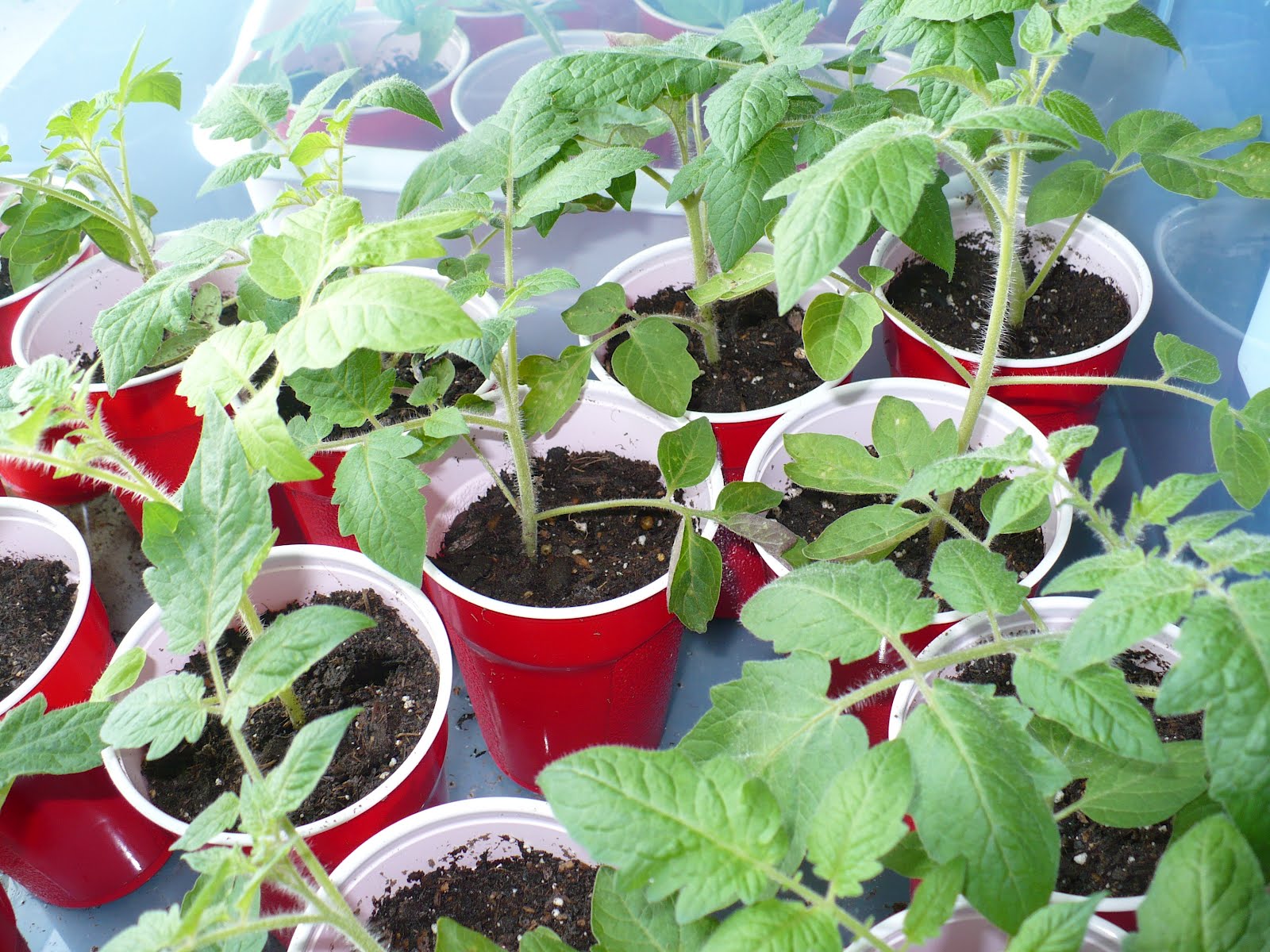
I have used a wide variety of containers. Free is always best so I try to use recycled yogurt cups. If I don't have those I use cheap plastic cups, paper cups can work but they don't hold up to the water very well. I have heard great things about egg cartons so I am trying those this year.

Coffee Anyone?


I listen to two podcasts about vegetable gardening GardeNerd & Vegetable Gardening. The past week I heard on both that brewed coffee grounds were a great fertilizer for the garden and can be used in multiple ways. They mentioned that coffee houses like Starbucks saved their grounds for people for their gardens. I don't have a Starbucks near me so I didn't think much about it, not being a coffee drinker. However, I was at a lunch today and noticed that they served coffee, shocker I know. I asked them if they could start saving their brewed grounds and, to make it short, I can start picking them up Monday.

So now that I had the grounds I needed to know what to do with them. So I found a couple blogs that talked about it. The Cheap Vegetable Gardener was the most informative in my opinion.

It will depend on how many pounds I can get but for the next couple months I plan to spread them on my garden and till them in before planting. As the garden progresses I will add them to my compost and use them in sort of compost tea fashion. I am excited to see what it will do for my tomatoes and melons. Apparently they do wonders for those things.